AG Thakur
Exosome Research Lab (ERL)
Prof. Dr. Basant Kumar Thakur
Working group
Medical Research Centre
Experimental Molecular and Cellular Hepatology, Gastro MFZ, 1st Floor
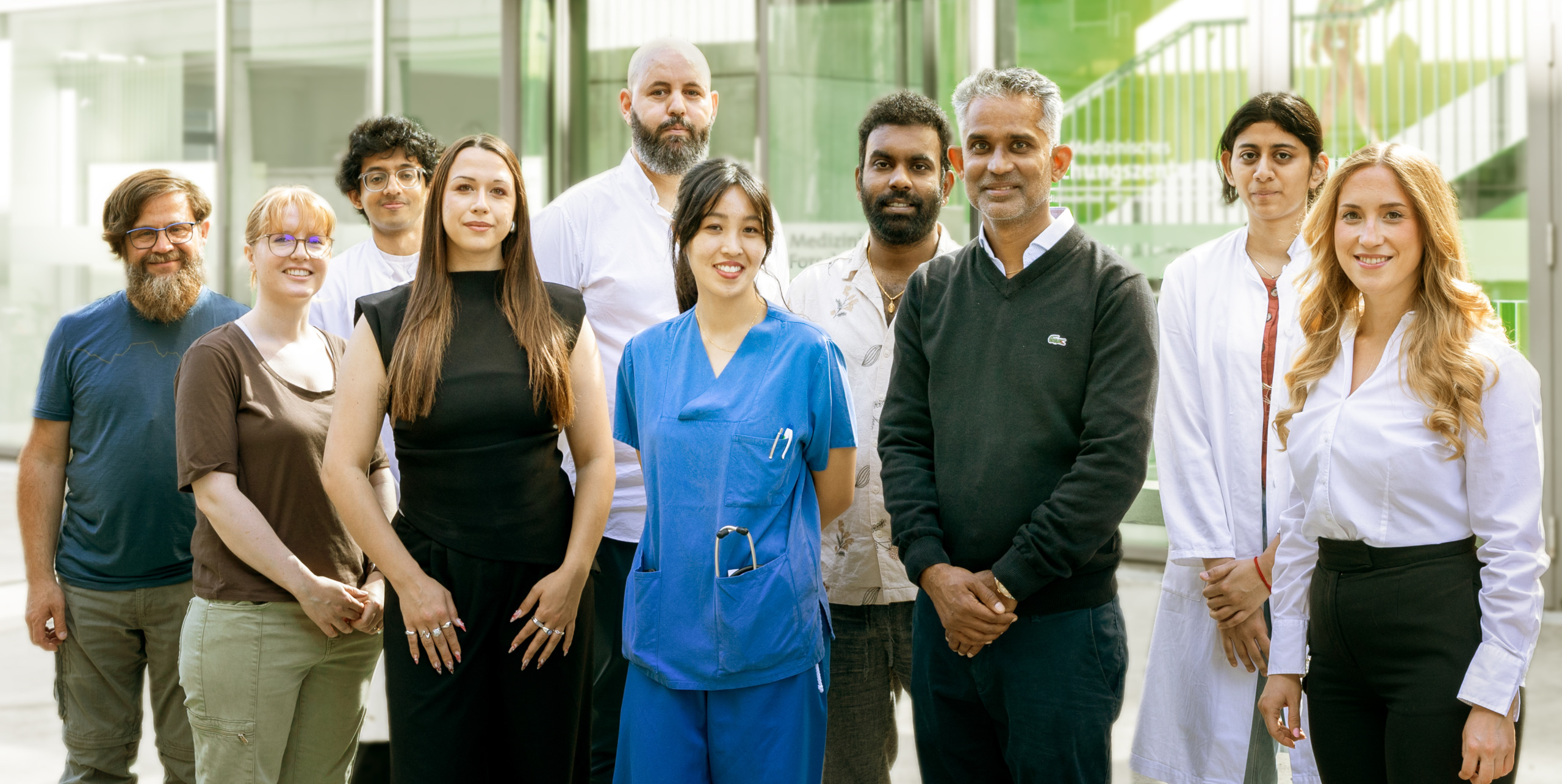
The Exosome Research Lab (ERL) is part of the Experimental Molecular and Cellular Hepatology Group led by Univ.-Prof. Dr. Basant Kumar Thakur, in the Department of Gastroenterology, Hepatology, and Transplantation Medicine at the University Hospital Essen. We are working on small extracellular vesicles (sEVs), nanoscale membrane-enclosed vesicles commonly known as exosomes, which are secreted by almost all cell types and are important mediators of communication between cells.
sEVs carry an elaborate cargo of molecules, including proteins, lipids, RNA, and DNA, that mirror the donor cell’s biology and actively influence recipient cell behavior. By studying the mechanisms of sEV packaging, release, and uptake, and decoding the messages they carry, we hope to uncover novel mechanisms of disease and to translate these into diagnostic and therapeutic advances.
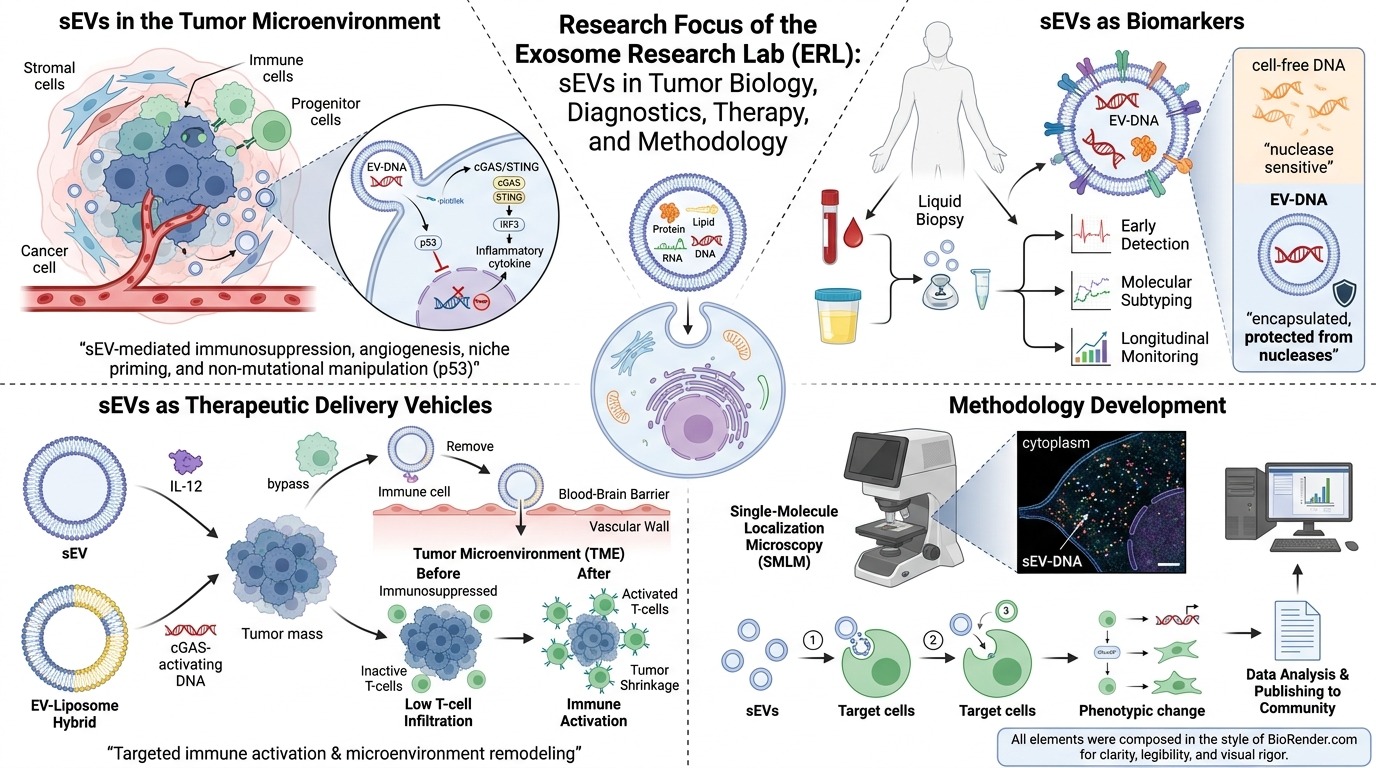
1. sEVs in the tumor microenvironment
Tumors exploit sEV-mediated communication to reprogram their microenvironment, escape immune responses, stimulate angiogenesis, and form a pre-metastatic niche. We investigate the interaction of cancer-derived sEVs with stromal cells, immune cells, and progenitor cell populations in promoting disease progression, with a special focus on gastrointestinal and hepatic malignancies (e.g., hepatocellular carcinoma, esophageal adenocarcinoma).
Among the most pioneering areas of our lab’s research are the discovery of dsDNA in cancer sEVs as a potential novel biomarker and the transfer of EV-DNA and protein complexes (we term EV-chromatin) to recipient cells, with a functional role in influencing the tumor microenvironment. Our work shows that EV-DNA can enter the cytoplasm and nucleus of recipient cells, where it interacts with innate immune sensors such as cGAS/STING, autophagy pathways, and endosomal trafficking machinery.
2. sEVs as biomarkers for disease diagnosis and Monitoring
sEVs are stably present in blood, urine, and other biofluids, thus providing a uniquely accessible window into ongoing disease processes. We develop and validate sEV-based liquid biopsy approaches for early detection, molecular subtyping, and longitudinal monitoring of cancer and other diseases such as acute liver failure (ALF) and inflammatory bowel diseases (IBD).
Our biomarker research targets multiple cargo types within sEVs. We investigate sEV-associated proteins as disease markers and focus on EV-DNA as a carrier of tumor-derived genomic information. Unlike cell-free circulating DNA, EV-encapsulated DNA is protected from nuclease degradation and offers unique analytical advantages for ultrasensitive cancer detection. Additionally, we integrate EV proteomics, miRNA profiling, and EV-DNA analysis to elucidate the role of EV-mediated crosstalk in disease progression.
3. Therapeutic delivery systems of sEVs
Beyond their role in disease, sEVs hold great promise as next-generation drug-delivery platforms. Their inherent capacity to cross biological barriers, evade immune clearance, and deliver cargo directly to target cells makes them attractive vehicles for targeted therapy. At the ERL, we are developing functionalized sEVs and EV-liposome hybrid particles engineered to selectively deliver active molecules to tumor tissues.
Our therapeutic engineering efforts are focused on loading sEVs and hybrid vesicles with immunostimulatory payloads such as IL-12, a potent cytokine that can activate anti-tumor immune responses, and cGAS-activating DNA fragments to activate the innate immune sensing pathway in tumor cells and stromal components of the microenvironment. We aim to develop delivery systems that can reprogram the immunosuppressive tumor microenvironment and improve the efficacy of cancer immunotherapy by combining the biological targeting properties of sEVs with precisely defined molecular cargo.
Summary of the research Focus
Our research focuses on deciphering the diagnostic and functional roles of sEVs in acute liver failure and hepatocellular carcinoma. We investigate (1) disease‑specific EV cargo as early indicators of liver injury and tumor progression, (2) the mechanistic impact of EV-mediated communication on stromal and immune cells within the liver microenvironment, and (3) the development of engineered EVs and hybrid EV‑liposome nanoparticles for targeted therapeutic delivery. By integrating proteomics, miRNA profiling, ex vivo liver perfusion models, and single‑molecule imaging with advanced nanotechnology, our work aims to uncover key EV-driven biological signals and translate them into diagnostic biomarkers and therapeutic strategies for liver disease and cancer.
The methodological contributions are shared with the community via peer-reviewed publications, thereby advancing the broader progress in EV biology.
The ERL is at the intersection of fundamental science and clinical medicine. In close collaboration with clinicians at University Hospital Essen, we translate mechanistic findings into clinically meaningful insights. Our ultimate goal is to develop sEV-based tools to improve disease diagnosis, guide treatment decisions, and monitor patient response to therapy, especially in patients with GI cancers and liver disease.
- Zhu X, Chetty VK, Ghanam J, Hila A, Yang Q, Strickfaden H, Bonn M, Cremer C, Hoyer PF, Liu X, Thakur BK. Single-molecule localization microscopy imaging of extracellular vesicle DNA in recipient cells. J Transl Med. 2026 Jan 3;24(1):130. doi: 10.1186/s12967-025-07563-3. PMID: 41484772; PMCID: PMC12866493.
- Ghanam J, Chetty VK, Anchan S, Reetz L, Yang Q, Rideau E, Liu X, Lieberwirth I, Wrobeln A, Hoyer P, Reinhardt D, Thakur BK. Extracellular vesicles transfer chromatin-like structures that induce non-mutational dysfunction of p53 in bone marrow stem cells. Cell Discov. 2023 Jan 31;9(1):12. doi: 10.1038/s41421-022-00505-z. PMID: 36717551; PMCID: PMC9887011.
- Chetty VK, Ghanam J, Lichá K, Brenzel A, Reinhardt D, Thakur BK. Y-box binding protein 1 in small extracellular vesicles reduces mesenchymal stem cell differentiation to osteoblasts-implications for acute myeloid leukaemia. J Extracell Vesicles. 2024 Mar;13(3):e12417. doi: 10.1002/jev2.12417. PMID: 38499475; PMCID: PMC10948369.
- Ghanam J, Chetty VK, Zhu X, Liu X, Gelléri M, Barthel L, Reinhardt D, Cremer C, Thakur BK. Single Molecule Localization Microscopy for Studying Small Extracellular Vesicles. Small. 2023 Mar;19(12):e2205030. doi: 10.1002/smll.202205030. Epub 2023 Jan 12. PMID: 36635058.
- Chetty VK, Ghanam J, Anchan S, Reinhardt K, …, Jablonska J, Nazarenko I, Thakur BK. Efficient Small Extracellular Vesicles (EV) Isolation Method and Evaluation of EV-Associated DNA Role in Cell-Cell Communication in Cancer. Cancers (Basel). 2022 Apr 20;14(9):2068. doi: 10.3390/cancers14092068. PMID: 35565197; PMCID: PMC9099953.
- Ghanam J, Lichá K, Chetty VK, Pour OA, Reinhardt D, Tamášová B, Hoyer P, Lötvall J, Thakur BK. Unravelling the Significance of Extracellular Vesicle- Associated DNA in Cancer Biology and Its Potential Clinical Applications. J Extracell Vesicles. 2025 Mar;14(3):e70047. doi: 10.1002/jev2.70047. PMID: 40091452; PMCID: PMC11911540.
- Thakur BK, Zhang H, Becker A, Matei I, …, Welte K, Bromberg J, Peinado H, Lyden D. Double-stranded DNA in exosomes: a novel biomarker in cancer detection. Cell Res. 2014 Jun;24(6):766-9. doi: 10.1038/cr.2014.44. Epub 2014 Apr 8. PMID: 24710597; PMCID: PMC4042169.
- Costa-Silva B, Aiello NM, Ocean AJ, Singh S, Zhang H, Thakur BK, Becker A, …, Matei I, Peinado H, Stanger BZ, Bromberg J, Lyden D. Pancreatic cancer exosomes initiate pre-metastatic niche formation in the liver. Nat Cell Biol. 2015 Jun;17(6):816-26. doi: 10.1038/ncb3169. Epub 2015 May 18. PMID: 25985394; PMCID: PMC5769922.
- Wortzel I, Seo Y, Akano I, …, Thakur BK, …, Sidoli S, Bromberg J, David Y, Kim HS, Lyden D. Unique structural configuration of EV-DNA primes Kupffer cell-mediated antitumor immunity to prevent metastatic progression. Nat Cancer. 2024 Dec;5(12):1815-1833. doi: 10.1038/s43018-024-00862-6. Epub 2024 Dec 3. PMID: 39627554; PMCID: PMC12185067.
- Reetz L, Ghanam J, Chetty VK, Barthel L, Tippelt S, Fleischhack G, Böckmann M, Reinhardt K, Thakur BK. Cerebrospinal Fluid-Derived Small Extracellular Vesicles May Better Reflect Medulloblastoma Proteomes than Those from Blood Plasma. Int J Mol Sci. 2025 Sep 23;26(19):9279. doi: 10.3390/ijms26199279. PMID: 41096549; PMCID: PMC12524324.
- Dr. med. Laura Reetz
- Dr. med. Sarah Jennrich
- Dr. med. Yannick Lippke
- Dr. rer. nat. Tino Dittrich
- Dr. rer. nat. Marius Bruer, Ph.D.
- Divakarvel Selvakumar, B.Pharm.
- Èlia Bosch Borràs, M.Sc.
- Dimitrios Alexandros Katelas, M.Sc.
- Maren Soldierer, M.Sc.
- Dr. med. Fabienne Kunz
- Dr. rer. nat. Evangelia Kontopoulou, Ph.D.
- Dr. rer. nat. Sarah Strachan, Ph.D.
- Dhanasekaran Rathinam, M.Sc.
- Sarah Bimmermann, M.Sc.
- Srishti Anchan B.Sc.
- Dr. rer. nat. Nicole Barwinski
- Dr. med. Merle Lesch
- Dr. med. Sarah Jennrich
- Dr. med. Marvin Droste
- Frida Kaußen, B.Sc.
- Dr. Katarina Reinhardt
- Prof. Dr. Claudia Veltkamp, Universitätsklinikum Essen, Essen, Germany
- Prof. Dr. Bernd Giebel, Universitätsklinikum Essen, Germany
- Prof. Dr. Jadwiga Jablonska, Universitätsklinikum Essen, Germany
- Prof. Dr. Shirley Knauer, University Duisburg Essen, Essen, Germany
- Prof. Dr. Dieter Hoyer, Universitätsklinikum Essen, Germany
- Prof. Dr. Carsten Deppermann, Universitätsklinikum Mainz, Mainz, Germany
- Prof. Dr. Andreas Roos, Universitätsklinikum Essen, Essen, Germany
- Prof. Dr. Silvia Vega Rubin de Celis, Universitätsklinikum Essen, Essen, Germany
- Prof. Dr. Kathrin Thedieck, Universitätsklinikum Essen, Essen, Germany
- Prof. Dr. Jan Lötvall, Universität Gotthenberg, Sweden
- Prof. Dr. Jan Best, Universitätsklinikum Essen, Germany
- Prof. Dr. Ruth Bröring, Universitätsklinikum Essen, Germany
- Prof. Dr. Kristian Pajtler, DKFZ, Heidelberg, Germany
- Prof. Dr. David Lyden, Weill Cornell Medicine, New York City, USA
- Prof. Dr. Florian Heidl, MHH, Hannover, Germany
- Prof. Dr. Jan Henning Klussmann, Universitätsklinikum Frankfurt, Frankfurt, Germany
- Prof. Dr. Martin Stanulla, Medizinische Hochschule Hannover, Germany
- Prof. Dr. Hector Peinado, Spanish National Cancer Research Centre (CNIO), Spain
- Prof. Dr. Brian Eliceiri, UCSD, San Diego, USA
- Prof. Dr. Verena Jendrossek, Universitätsklinikum Essen, Germany
- Prof. Dr. Peter Hoyer, Prof. Dr. Anja Büschner and Prof. Dr. Lars Pape, Universitätsklinikum Essen, Germany
- Prof. Dr. Christoph Cremer and Dr. Xiaomin Liu, Max Planck Institutes for Polymer Research and for Chemistry, Mainz, Germany
- Prof. Dr. Joachim Fandrey and Dr. Anna Wrobeln, Universitätsklinikum Essen, Germany
- Hermann-Seippel-Preis – Deutscher Forschungspreis für Kinderheilkunde. “Double-stranded DNA (dsDNA) in extracellular vesicles (Exosomen) as potential diagnostic marker in pediatric brain tumor (AT-RT)”.
- Deutsche José Carreras Foundation Grant. “Extracellular vesicles as novel informative biomarker in pediatric acute myeloid leukemia”.
- Transcan 2017, ERA-NET, BMBF. “New strategies to detect cancers in carriers of mutations in RB1: blood tests based on tumor-educated platelets,TEPs, or exosomes”.
- Hubertus Trettner Stiftung. “Liquid Biopsy in Relased Ewing Sarcoma (LiBRES)“
- Deutsche Forschungsgemeinschaft (DFG). “Diagnostic utility and functional role of exosomes in Head and Neck cancer (HNC).”
- Deutsche Kinderkrebsstiftung. “Establishment of a diagnostic approach using extracellular vesicles as potential biomarkers in medulloblastomas and their functional characterization”.
Staff members
Lab Postdocs

Dr. rer. nat.
Venkatesh Kumar Chetty
Postdoc, Exosome Research Lab

Dr.
Jamal Ghanam, Ph.D.
Postdoc, Exosome Research Lab
Lab PhD-Students

Mira Schiefer
Doktorandin (cand. Ph.D., in Joint Supervision with Univ.-Prof. Dr. med. Ulrike Schara-Schmidt and PD Dr. rer. nat, Andreas Roos, Department of Pediatric Neurology), Exosome Research Lab

Theresia Tu
Assistenzärztin, Doktorandin (cand. MD.), Exosome Research Lab
Technical assistants

Anisa Hila, B.Sc.
MTA, B.Sc., Exosome Research Lab
Lab students in training

Sai Nand, B.Sc.
Lab student in training (cand. M.Sc.), AG Thakur – Exosome Research Lab

Sruti Subramaniam
Lab student in training (cand. M.Sc.), AG Thakur – Exosome Research Lab

Prof. Dr.
Basant Kumar Thakur
W2-Professur Experimental Molecular and Cellular Hepatology, Laborleiter/Head: Exosome Research Lab, Member of ZMB and ACTIVE SITES, UDE
Marco Egen
Lab Manager and Secretary Exosome Research Lab, Ansprechpartner Zuweiser-Hotline, Vertretung Sekretariat Endoskopie, Klinische Kodierfachkraft